
Sustainable Gardens Built for Rockhampton Conditions
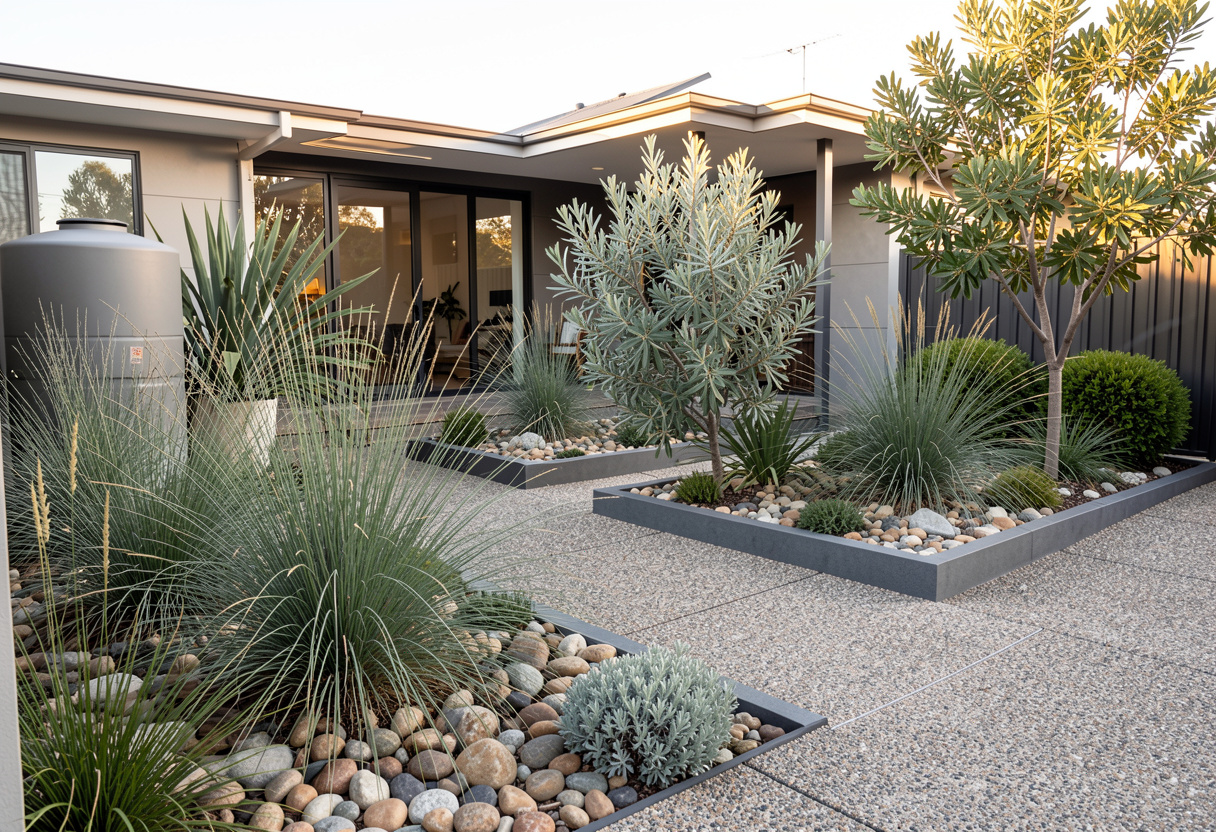
If you’re tired of watching your garden struggle through Rockhampton’s six-month dry season while your water bills keep climbing, you’re not alone. We’ve been helping Rockhampton families create sustainable landscapes that actually work with our climate instead of fighting against it for years now. Our sustainable landscaping approach combines water-wise native plants, rainwater harvesting, and organic soil building to create gardens that thrive in Central Queensland’s extremes without the constant maintenance and costs.
Whether you’re in Norman Gardens dealing with red clay soil or out in Gracemere wanting a garden that survives extended drought, we design and install eco-friendly landscapes that save water, support local wildlife, and cut your ongoing maintenance expenses. We know sustainable landscaping isn’t just about being environmentally responsible, it’s about creating a garden that actually makes sense for your property and your lifestyle.

Water Conservation Strategies
We prioritize drought-tolerant native and adaptive plants that survive Rockhampton’s dry season without constant irrigation. Efficient drip systems with smart controllers water only when needed, while rainwater harvesting captures wet season rainfall for dry season use. Mulching to 100mm depth retains soil moisture and reduces evaporation dramatically. Hydrozoning groups plants by water requirements so you’re not overwatering hardy natives to keep thirsty exotics alive. Many clients eliminate or drastically reduce lawn areas, which are the most water-hungry part of any property.
Building Healthy Soil Organically
We focus on long-term soil health through composting organic waste on-site rather than sending it to landfill. Minimal disturbance practices protect soil structure and biology in Rockhampton’s red clay. Regular organic matter incorporation builds soil that holds moisture and nutrients naturally. You won’t see synthetic fertilizers in our approach – we’re building soil biology with worms, beneficial microorganisms, and natural amendments. Organic mulching feeds the soil as it breaks down while suppressing weeds and moderating temperature extremes.
Native and Climate-Appropriate Plants
Indigenous Central Queensland species get priority in our designs because they’ve evolved to handle our specific conditions. These plants need minimal supplemental watering once established, resist local pests and diseases naturally, and provide habitat for wildlife that’s adapted to them. We also include climate-adapted species from similar regions that perform reliably in Rockhampton’s heat, humidity, and dry periods. Local genetic provenance matters – plants sourced from Central Queensland nurseries are better adapted than southern varieties of the same species.
Chemical-Free Approach
Organic pest management using beneficial insects, companion planting, and building plant health replaces synthetic pesticides entirely. Natural fertilizers like compost, aged manures, and seaweed extracts provide balanced nutrition without the salt buildup and environmental damage of synthetic products. Integrated pest management means accepting minor pest presence while maintaining overall garden health. We’re finding most pest and disease issues resolve themselves when you create balanced ecosystems rather than sterile monocultures.
Waste Reduction and Resource Efficiency
On-site composting turns garden waste into valuable soil amendment instead of sending it to landfill. Grass clippings and prunings get mulched back into gardens, returning nutrients where they came from. We source recycled or reclaimed materials for hardscaping – pavers, timber, and aggregates with previous lives. Local material sourcing reduces transport emissions and supports regional suppliers. The less packaging and plastic involved in maintaining your garden, the better.
Energy-Efficient Solutions
Solar-powered outdoor lighting eliminates electrical infrastructure and ongoing energy costs entirely. Manual or electric mowers replace petrol equipment when lawn areas are maintained. Strategic shade tree placement provides passive cooling that reduces air conditioning loads in summer. Native plant choices that require minimal maintenance mean less fuel burned on mowing, trimming, and equipment use overall.
Creating Wildlife-Friendly Landscapes
Bird-attracting native plants provide nectar, seeds, and berries that support honeyeaters, finches, and parrots. Butterfly gardens include host plants where caterpillars feed and nectar sources for adults. Native bee habitat with hollow stems and undisturbed soil patches supports solitary native bee species that are more effective pollinators than European honeybees. Water sources like bird baths, small ponds, and shallow dishes become hubs of activity, especially during dry season.
Chemical-free gardens protect beneficial insects that control pests naturally. Connectivity to neighboring green spaces allows wildlife to move safely through the suburbs. Diverse plant layers from groundcovers to canopy provide habitat niches for different species.
Sustainable Lawn Alternatives
Traditional lawn is the most resource-intensive part of most gardens, requiring weekly mowing, regular fertilizing, and constant watering. Native groundcovers like violets and myoporum spread to form dense low-maintenance covers that need mowing once or twice yearly at most. Dichondra or clover lawns stay green with minimal water, never need fertilizing, and handle foot traffic surprisingly well.
If you really want lawn, Buffalo grass is the most drought-tolerant option for Rockhampton, though it still needs more water than native alternatives. Mulched garden beds can expand to replace lawn in low-traffic areas. Permeable gravel creates functional spaces without the maintenance burden of grass. Productive spaces with vegetables and herbs replace ornamental lawn in many client gardens, providing harvests instead of just something to mow.

Sustainable Garden Styles We Design
They design eco-friendly garden styles that balance beauty, productivity, and environmental benefits.
Native Habitat Gardens use indigenous plants to create natural ecosystems that support wildlife, require minimal maintenance, and become more beautiful over time.
Permaculture Food Forests combine layered trees, shrubs, herbs, and groundcovers to produce food year-round while enriching soil and reducing external inputs.
Water-Wise Contemporary Gardens feature drought-tolerant plants, efficient irrigation, and modern design elements to reduce water use while maintaining a clean, stylish look.
Regenerative Landscapes focus on improving soil health, increasing biodiversity, and enhancing ecological functions for long-term sustainability.

Rockhampton-Specific Sustainable Strategies
Adapting to the Dry Season: Deep-rooted native trees, thick mulch, drought-dormant species, and rainwater harvesting keep gardens thriving through Rockhampton’s six-month dry season.
Managing Wet Season Excess: Bioswales, rain gardens, permeable surfaces, strategic grading, and water-tolerant plants capture heavy rainfall and prevent runoff issues.
Red Clay Soil Improvement: Organic matter and gypsum gradually condition heavy clay, supporting clay-adapted natives while improving soil structure over time.
Heat Mitigation: Shade trees, light-colored mulches, dense plantings, reduced paved areas, and green walls lower temperatures, creating cooler, more comfortable outdoor spaces.
Our Sustainable Landscaping Process
Phase 1: Site Analysis
Assess sun/shade patterns, soil, existing vegetation, water availability, wildlife corridors, and reusable materials to guide design decisions.
Phase 2: Sustainable Design
Plan native plant palettes, water-wise zones, rainwater harvesting, composting areas, permeable surfaces, solar lighting, and wildlife habitats for a functional, eco-friendly layout.
Phase 3: Eco-Friendly Installation
Use minimal soil disturbance, organic amendments, locally sourced plants, sustainable materials, efficient irrigation, and chemical-free establishment methods.
FAQs About Sustainable Landscaping in Rockhampton
How long does it take for a sustainable garden to establish in Rockhampton?
Most sustainable landscapes in Rockhampton take 12-18 months to fully establish, though you’ll see good coverage within 6 months if we plant during the wet season. Native plants spend their first year building deep root systems rather than focusing on top growth, which is why they survive our dry season so well once established. We’re honest that sustainable gardens require patience upfront, but once they’re in, they’re in for decades without the constant replacement cycle you get with exotic plants. The Norman Gardens and Frenchville properties we installed 3-5 years ago are now completely self-sufficient and look better every year.
Can I convert my existing garden to sustainable landscaping or do I need to start from scratch?
You absolutely can convert existing gardens to sustainable landscaping Rockhampton style without ripping everything out at once. We typically do staged conversions where we tackle one area at a time – maybe starting with the struggling garden beds out front while keeping your established shade trees and functional areas. Mature trees stay regardless of species if they’re healthy, and we work around existing hardscaping that’s still in good condition. Most clients in The Range and Berserker prefer phased approaches that spread costs over 12-24 months and let them see results before committing to the whole property.
Will my sustainable garden look messy or unkempt compared to my neighbors' traditional gardens?
This is probably the biggest misconception we deal with, and the answer is absolutely not if it’s designed and maintained properly. Sustainable native gardens can be as formal or informal as you want – we’ve installed very structured, manicured sustainable landscapes in Park Avenue that look incredibly polished. The difference is you’re achieving that look through plant selection and smart design rather than constant pruning and chemical inputs. Your neighbors might not even realize your garden is sustainable until they notice you’re not dragging hoses around during dry season while their lawns are dying.
What happens to my sustainable garden during Rockhampton's wet season monsoons?
Sustainable gardens in Rockhampton are specifically designed to handle our heavy wet season rainfall through bioswales, permeable surfaces, and plant selections that tolerate periodic waterlogging. The organic mulch layers and improved soil structure actually absorb and infiltrate water rather than creating runoff and erosion like conventional lawns do. You might see some plants looking overly lush or growing rapidly during December-February, but that’s normal and actually beneficial since they’re storing energy for the dry months ahead. Properties we’ve done in lower-lying areas like Depot Hill include specific drainage solutions as part of the sustainable design so excess water becomes an asset rather than a problem.
How much maintenance does a sustainable landscape actually need once it's established?
Once established, most of our sustainable landscapes in Rockhampton need maintenance visits every 4-6 weeks rather than weekly mowing and constant intervention. You’re looking at seasonal mulch top-ups, occasional pruning to maintain shape, and harvesting compost rather than fertilizing, spraying, and fighting to keep plants alive. Clients in Gracemere and Parkhurst with larger semi-rural blocks report spending 70-80% less time on garden maintenance compared to their previous conventional gardens. The trade-off is that first 12-18 months requires more attention to get everything established properly.
Can I still have colorful flowering plants in a sustainable native garden?
Native gardens can be absolutely loaded with color year-round – Grevilleas, Callistemons, Acacias, Banksias, and Bottlebrushes all flower prolifically in reds, yellows, oranges, and pinks. The difference is sustainable natives flower in response to Rockhampton’s seasons rather than requiring constant deadheading and fertilizing to force blooms like exotic annuals do. We’ve designed sustainable gardens in Frenchville and Kawana that have something flowering every month of the year using only native and climate-adapted species. Plus you get the bonus of all those flowers attracting honeyeaters, rainbow lorikeets, and butterflies that conventional gardens with exotic flowers don’t support.
