
Beach House Landscaping Built for Capricorn Coast Conditions
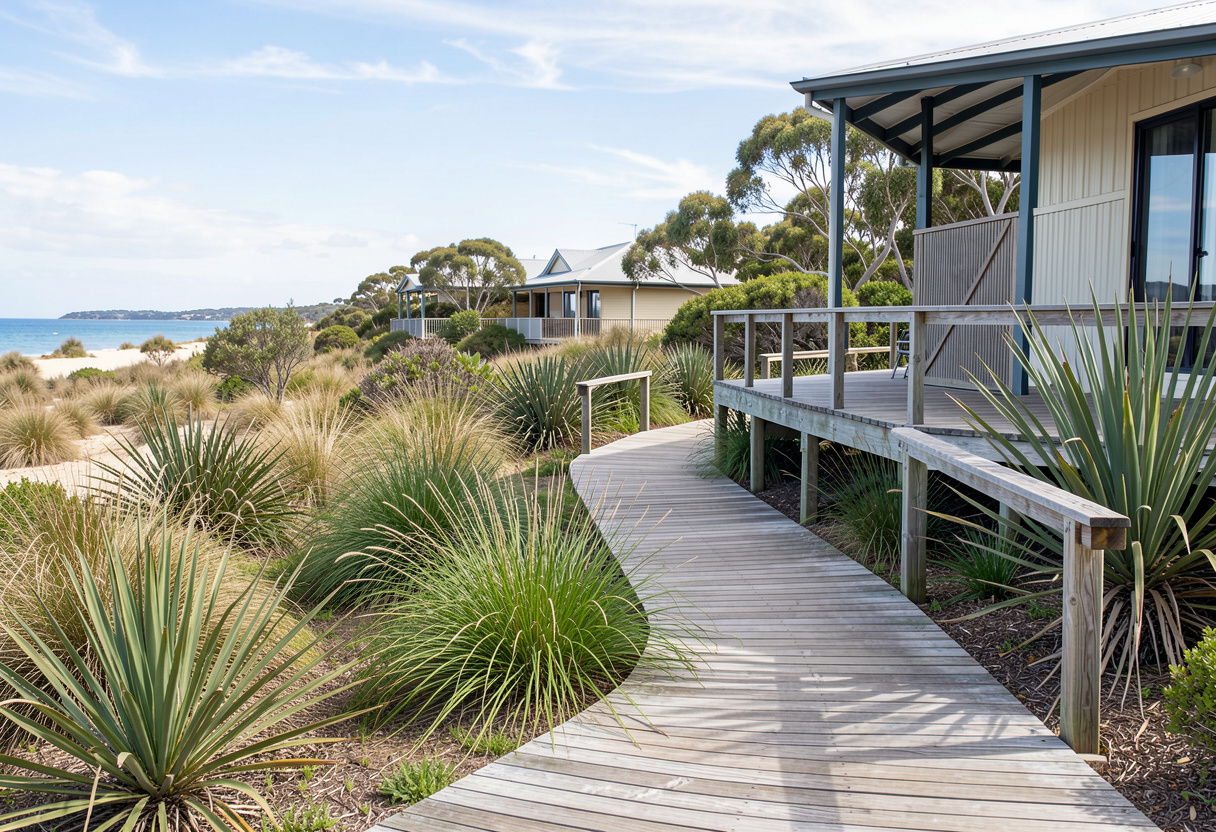
There’s something special about owning a place on the Capricorn Coast. Maybe it’s a weekender at Yeppoon where your family escapes on long weekends, or a permanent home at Emu Park where you’re living the coastal lifestyle full-time. Either way, you’ve probably noticed how quickly the salt air and relentless wind can turn a beautiful garden into a brown, struggling mess.
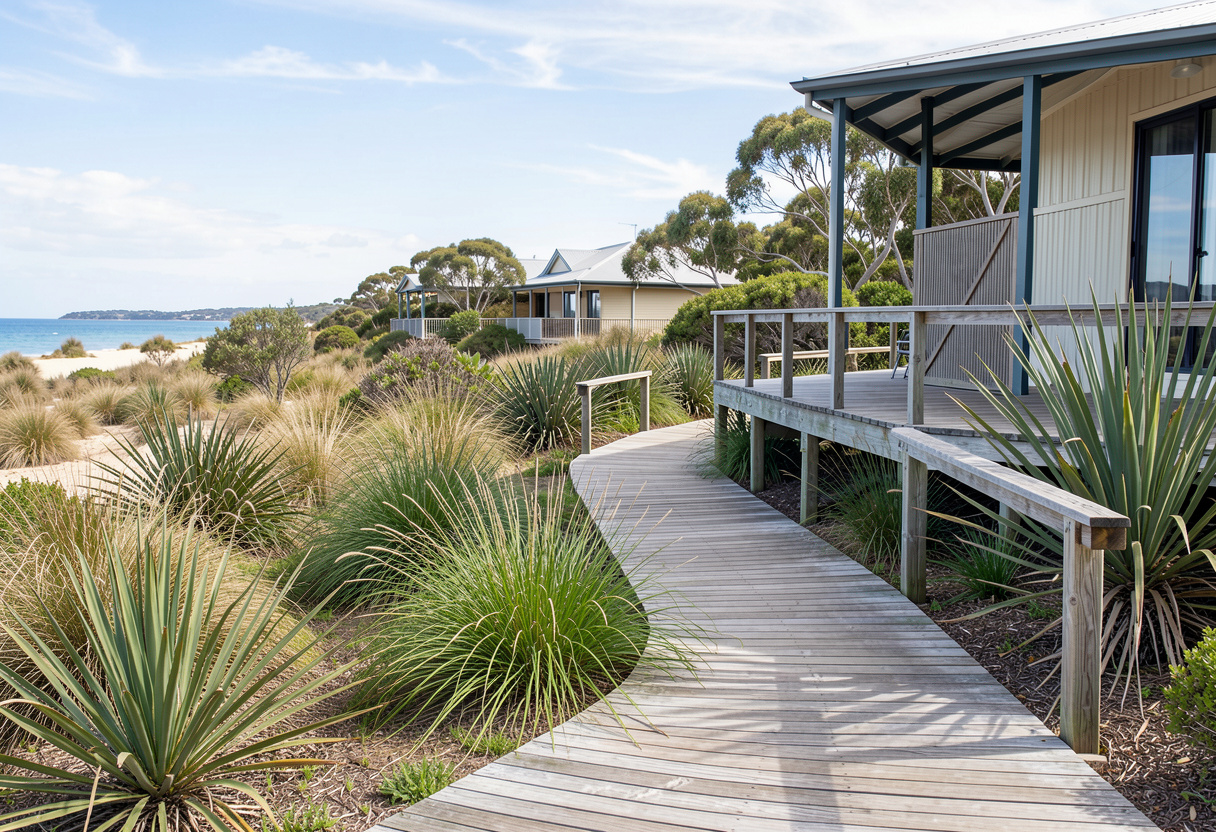
We’ve worked on dozens of coastal garden design across Yeppoon, Emu Park, Keppel Bay, and Kinka Beach, and we’ve learned exactly which plants survive the harsh coastal conditions and which ones don’t make it past their first summer. Our beach house landscaping service creates outdoor spaces that actually work with the coast’s challenges instead of fighting against them – meaning you get to enjoy your ocean views and outdoor entertaining without constantly replacing dead plants or watching your deck corrode away.

Expansive Decks Capturing Ocean Views
Your deck’s probably the most-used space in a beach house, so we design them large enough for proper entertaining – think 40-50m² minimum for a decent setup. We position decking to frame your best ocean views while creating wind-protected zones where you can actually sit without getting sandblasted during a sea breeze.
Outdoor Kitchens Built for Coastal Weather
Stainless steel’s non-negotiable for beach house outdoor kitchens – anything else corrodes within months. We’re installing marine-grade fixtures, weatherproof cabinetry, and positioning cooking zones to work with prevailing winds rather than fighting them. Nobody wants smoke blowing straight back into their BBQ area every time they’re grilling.
Fire Pits for Cool Evening Entertaining
Keppel Bay evenings can get surprisingly cool once the sun drops, which is when a properly positioned fire pit turns your outdoor area into the gathering spot. We’re creating gas or wood-burning setups with wind protection, comfortable seating distances, and positioning that doesn’t fill your house with smoke when the wind shifts.
Pool Integration with Beach House Aesthetic
Most beach house pools we’re designing now are saltwater systems – seems ironic when you’re 200m from the ocean, but they’re lower maintenance and gentler on surrounding landscaping. We’re creating resort-style pool surrounds with slip-resistant paving, outdoor showers for sand rinse-off, and tropical plantings in wind-protected zones around the pool fence.
Corrosion-Resistant Materials and Fixings
Marine-Grade Stainless Steel: All exposed hardware should be 316 marine-grade stainless steel — cheaper metals corrode quickly in salt air.
Powder-Coated Aluminum: Best for gates, screens, and fencing. It’s lightweight, rust-resistant, and needs far less repainting than steel.
Treated Timber: Ground-contact timber must be H5 treated to prevent rot in humid coastal conditions, with sealed cut ends for extra protection.
Low-Maintenance Design for Holiday Homes
Automation for Absentee Owners
Smart irrigation and drought-tolerant plants keep gardens alive while the property sits empty.
Minimal Lawn Areas: Small, defined Buffalo grass sections reduce upkeep, with most areas replaced by mulch and native groundcovers.
Mulched Garden Beds: Thick mulch layers cut weeds, retain moisture, and significantly lower maintenance time.
Maintenance Visits Available: Optional regular servicing, storm cleanup, and pre-arrival prep keep your beach house ready for every visit.

Balancing Privacy with View Corridors
Strategic Screening Without Blocking Views: The trick with beach house landscaping around Emu Park and Yeppoon is creating privacy from neighbors without destroying the ocean views you paid premium money to get. We’re using layered plantings at different heights, positioning trees to block sightlines to neighboring properties while keeping your view corridors completely open.
Glass and Timber Privacy Panels: Sometimes plants alone can’t give you the privacy you need, especially on narrow beachfront lots. We’re installing frameless glass panels that give you screening without blocking views, or horizontal timber battens that create visual separation while still letting breezes through. Both options use marine-grade fixings that won’t corrode.
Outdoor Shower Privacy Screens: Nobody wants their outdoor shower visible to every neighbor and passing boat – but you still need ventilation in Rockhampton’s humid climate. We’re designing privacy screens using coastal-tolerant vertical gardens, frosted panels, or strategically positioned pandanus that give you coverage without creating a sweatbox when you’re rinsing off.
Five Beach House Design Styles That Work
Hamptons Coastal Elegance: Formal white-on-white look with clipped hedges and structured lawns. Beautiful but higher maintenance.
Tropical Beach Resort Style: Lush palms, frangipani, pools, and resort features create a holiday vibe with moderate upkeep.
Relaxed Coastal Cottage Aesthetic: Soft, informal planting with coastal natives and weathered timber accents. Easy and low-maintenance.
Contemporary Beach Modern Design: Clean lines, architectural plants, and minimal species for a sleek, modern finish.
Natural Coastal Bush Style: Preserves native vegetation and dune systems. Lowest maintenance and eco-friendly.
Our Beach House Design Process
Site Assessment and Exposure Analysis
We’re starting every beach house project with detailed site assessment including distance from ocean, prevailing wind patterns, existing vegetation evaluation, and soil testing for salinity and pH. Understanding your specific salt exposure zone determines which plants will survive – and which are guaranteed to fail within months.
Concept Design and Style Selection
After understanding how you want to use your outdoor spaces – entertaining, pool area, privacy needs, beach access – we’re developing concepts showing 2-3 design directions. You’ll see sketches or 3D renders showing different aesthetic approaches from Hamptons elegance through to natural coastal bush style, along with plant palettes appropriate to your exposure.
Detailed Design and Documentation
Once you’ve selected your preferred concept, we’re developing detailed plans with exact plant specifications, hardscape layouts, irrigation design, and lighting plans. For properties requiring council approval, we’re preparing all documentation including environmental impact considerations and compliance with coastal management requirements. You’re getting engineered drawings for structures requiring certification.
Installation and Establishment
Installation typically takes 2-4 weeks depending on project scope. We’re sequencing work logically – hardscaping first, then irrigation installation, priority windbreak plantings, and finally garden bed establishment. Plants go in at optimal times for establishment (autumn’s ideal for most species), and we’re providing detailed care instructions for the first 6-12 months.
FAQs About Beach House Landscaping
What's the best time of year to start a beach house landscaping project in Yeppoon or Emu Park?
We’re recommending autumn (March-May) as the ideal time to start most beach house landscaping around the Capricorn Coast. Plants establish better when they’re not fighting summer heat stress, and you’re working in more comfortable conditions than the 35-degree days we get December through February. The wet season’s usually finishing up by late March, so soil’s not waterlogged, and you’ve got the cooler months ahead for plants to develop strong root systems before their first summer. If you’re planning major hardscaping like decks or pergolas, dry season (May-October) is easier for construction crews.
How long before my coastal garden actually looks established and fills in?
You’re looking at 12-18 months for most beach house gardens around Rockhampton’s coast to really fill in and look mature. Coastal natives like pandanus and banksias grow steadily but aren’t fast – they’re building wind resistance and salt tolerance rather than racing upward like suburban plants. Groundcovers and lomandra fill gaps quicker (6-9 months), while larger screening trees might take 2-3 years to reach their full privacy potential. The wait’s worth it though – plants that establish slowly in our harsh coastal conditions end up way tougher than fast-growing species that struggle long-term.
Should we landscape before building our beach house or wait until construction's finished?
Wait until your house is finished – I’ve seen too many beautiful gardens destroyed by construction traffic, material deliveries, and trades parking equipment all over newly planted areas. The exception is if you’re doing major earthworks or retaining walls that need to happen before building starts, but even then, hold off on final plantings and finishing touches. What we can do during construction is install underground irrigation lines and drainage before paving goes down, then come back for planting once builders are gone and you’re not risking damage to expensive landscaping.
Our existing beach house garden's completely overgrown - do we need to start from scratch?
Not always – we’re assessing what’s worth keeping versus removing when we visit your Emu Park or Keppel Bay property. Mature pandanus, established banksias, or healthy palms that are already wind-trained and salt-tolerant are valuable assets we’ll work around. Struggling exotic plants, dead hedges, and anything diseased gets removed. Sometimes we’re renovating garden beds around existing trees, improving soil, adding irrigation, and underplanting with coastal-appropriate species rather than bulldozing everything and starting over.
Will my dogs wreck the landscaping, and are coastal plants safe for pets?
Dogs and beach house gardens can work together if we’re planning for it from the start. We’re creating defined lawn areas where dogs can run (Buffalo grass handles traffic better than couch), using robust plants like lomandra and coastal rosemary that bounce back from occasional trampling, and avoiding delicate species in high-traffic zones. Most coastal natives we use are pet-safe, though we’re steering clear of cycads and some lilies if you mention pets during design. Mulched pathways give dogs clear routes through garden beds rather than encouraging shortcut trails through your plantings.
How do we protect our beach house landscaping when cyclone warnings are issued?
Soon as a cyclone warning’s issued for the Capricorn Coast, you’re bringing in all outdoor furniture, removing shade sails (they’ll destroy themselves and whatever they’re attached to), and securing any loose items like pot plants or decorations. We’re designing removable elements with cyclones in mind – nothing permanently fixed that can’t be taken down quickly. Your in-ground plants and engineered structures should survive fine (that’s why we engineer them properly), but anything moveable needs securing or storing inside. After the cyclone passes, we’re available for debris cleanup, damaged plant removal, and repairs to any landscaping elements that didn’t make it through.
