
Professional Stone Paving Installation in Rockhampton
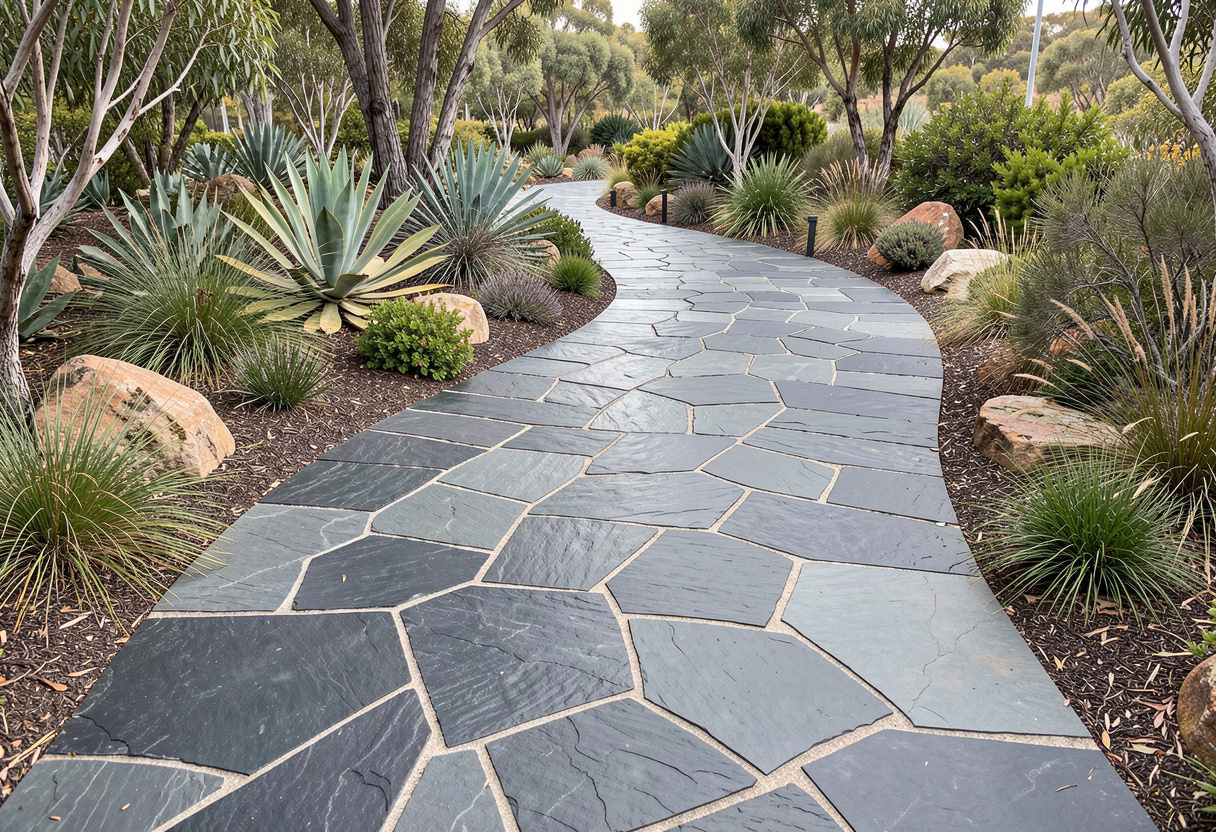
Stone paving installation transforms your Rockhampton outdoor spaces into something genuinely special. We’re talking about natural bluestone, granite, slate, travertine, and quartzite – materials that’ve been forming under the earth for millions of years. Each piece is different from the next, which means your patio or pool area won’t look like every other house on your street. The big advantage for Rockhampton properties? Natural stone stays significantly cooler underfoot than concrete or dark pavers when we’re pushing 35°C in summer.
You can actually walk barefoot across travertine around your pool without doing that hot-foot dance. We’ve been installing premium stone paving across Norman Gardens, Frenchville, The Range, and throughout Central Queensland. Our installations last 50+ years when done properly, which is why we take the time to get the base preparation right from day one.

Step 1: Consultation and Stone Selection
We start with a free consultation at your property. You’ll see actual stone samples, not just photos. We’ll recommend stone types based on your application – pool, patio, driveway – and your home’s style. Discuss finish options (textured vs. smooth) and show you exactly what the final result will look like. Detailed quote breaks down material costs, installation, and timeframes so there’s no confusion later.
Step 2: Site Preparation
Site prep takes 1-2 days and determines whether your stone paving lasts 5 years or 50. We excavate 200-300mm deep, more for driveways. Base preparation for stone is different than pavers – needs to be perfect. Compaction to 95% MDD means no settling. Precise leveling because stone shows every imperfection. This is where most cheap installations fail, so we don’t cut corners here.
Step 3: Stone Installation
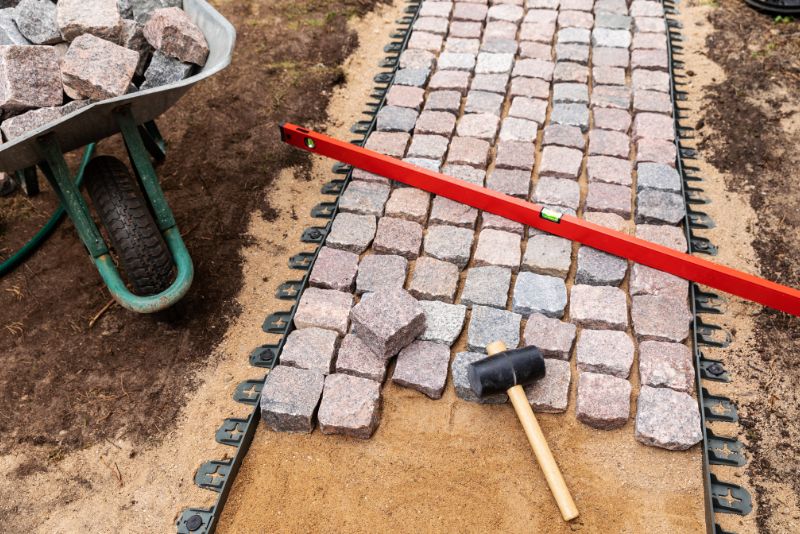
Installation takes 3-5 days for typical patios. Each stone is individually placed and leveled – this isn’t a pour-and-screed job. Mortar bed or sand-set method depending on application. Skilled cutting and fitting because natural stone doesn’t come in perfect rectangles. Joint spacing typically 5-10mm for natural movement. Grouting or sand-filled joints depending on the look you’re after and foot traffic expected.
Step 4: Finishing and Sealing
Final day is cleaning, sealing, and finishing touches. Initial sealing is included – 2-3 coats for maximum protection against Rockhampton’s weather. Joint finishing ensures everything’s neat and water drains properly. We walk through care instructions so you know how to maintain your investment. Final inspection confirms everything meets our quality standards. You’ll get warranty documentation covering workmanship.
Stone Paving Maintenance and Care
Initial Sealing Application: Stone is sealed after curing with 2–3 coats to protect against weather and stains while enhancing natural color. This is included in the installation.
Ongoing Maintenance Requirements: Sweep regularly, hose down monthly, pressure wash annually on low setting, and reseal every 2–4 years depending on use.
Stain Prevention and Treatment: Clean spills quickly, use pH-neutral cleaners, and reseal regularly to prevent stains—prevention is key with natural stone.
Investment and Value Proposition
Rockhampton Climate Considerations
Heat Management for Stone: Light-colored stones – travertine, cream granite, light quartzite – stay cooler in Rockhampton’s summer heat. Dark charcoal slate and black granite absorb heat and get genuinely hot underfoot. Textured finishes stay cooler than polished because they don’t create that heat-reflecting surface.
Slip Resistance for Wet Season: Thermal or flamed finishes on bluestone and granite provide excellent grip. Natural cleft slate is inherently slip-resistant. Polished finishes belong indoors only – they’re dangerous wet outdoors.
Sealing Requirements: Sealing is non-negotiable in Rockhampton. Protects stone from moisture penetration during wet season. Prevents staining from leaves, barbecue spills, and organic matter. UV-stable sealers stop color fading from our intense sun. We’re reapplying sealer every 2-4 years depending on traffic and exposure.
Drainage Engineering: Stone paving needs excellent drainage, especially with Rockhampton’s monsoonal rainfall. We engineer proper falls to prevent water pooling – usually 1:100 minimum fall. Heavy wet season downpours can dump 100mm in hours, so drainage paths are critical. Quality base construction with adequate drainage prevents the stone lifting or settling.
Design Styles for Stone Paving
Contemporary Luxury Style: Large-format bluestone or granite creates sleek, modern lines with minimal joints and a high-end resort look—perfect for contemporary homes and pool areas.
Traditional Elegance Style: Sandstone or travertine in classic patterns suits Queenslander homes, offering warm tones and a timeless look that ages beautifully.
Rustic Natural Style: Slate or irregular stone shapes create an organic, relaxed feel that blends with native landscaping and bush-style gardens, often at a lower cost.
FAQs About Stone Paving in Rockhampton
Can You Install Stone Paving Over My Existing Concrete Patio?
Yeah, we can overlay stone onto existing concrete if the base is solid and level. The concrete needs to be structurally sound with no major cracks or movement – if it’s failing, the stone will fail too. This saves on excavation costs and speeds up the job, which matters when you’re working around Rockhampton’s wet season timeframes. We’ll assess your existing slab during the free consultation and tell you honestly whether overlay works or if you’re better starting fresh.
How Long Before I Can Walk on the New Stone Paving?
You can walk on it the same day for sand-set installations. Mortar-set stone needs 24-48 hours before foot traffic, and we’ll keep you off it for 72 hours before moving furniture back. The sealer needs to cure for 24 hours, so we typically finish on a Friday and you’re entertaining by Sunday. Most Rockhampton clients are surprised how quick the turnaround is compared to concrete that needs a week to cure properly.
Will Stone Crack in Rockhampton's Heat and Storms?
Properly installed stone doesn’t crack from heat or typical storms – it’s been handling extreme weather for millions of years in the ground. The base preparation and correct joint spacing handles expansion and contraction from our temperature swings. We’ve had stone installations survive direct hail impact during severe storms that destroyed car windscreens next to them. Individual stones can chip from dropping heavy objects, but cracking from weather alone means the installation was done wrong, not that stone is unsuitable.
Can I Install Stone Paving Myself to Save Money?
You can, but I’d honestly recommend against it unless you’ve got trade experience. Getting the base preparation right requires compaction equipment and knowledge – this is where DIY jobs fail within 2-3 years. Cutting natural stone needs diamond blades and proper technique to avoid wasting expensive material. The cost difference between DIY disaster and professional installation isn’t worth the headache, especially when you’re looking at your failed patio every day and knowing you could’ve had it done right once.
Can We Do the Stone Paving in Stages to Spread the Cost?
Absolutely, and we design installations with staged completion in mind for Rockhampton clients managing budgets. Common approach is patio first for immediate entertaining use, then pathways, then pool surround over 12-24 months. We plan the whole design upfront so each stage looks complete on its own and connects properly when you add the next section. This also lets you spread the investment across financial years if that helps with tax planning for business owners or self-employed clients.
Is Stone Paving Safe for My Elderly Parents When They Visit?
Stone with textured finish is actually safer than most alternatives, which matters for your generation hosting aging parents. Travertine and textured bluestone provide excellent grip even when wet during our humid months. We pay attention to level transitions and avoiding trip hazards – something you’re thinking about more in your 50s and 60s. The natural slip resistance works for grandkids running around the pool and for older visitors who aren’t as steady on their feet anymore.
